 |
Best Price : Availability : N/A |
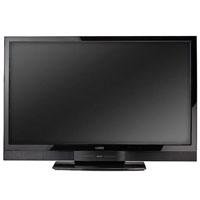
VIZIO SV420M 42 INCH CLASS 1080P 120HZ LCD FULL HDTV Features
|
|
 |
|
Best Price : Availability : N/A |
VIZIO SV420M 42 INCH CLASS 1080P 120HZ LCD FULL HDTV Features
|
|
|
 |
Rating :  Best Price :$849.99 Offer Price : $762.00 Availability : Usually ships in 1-2 business days |
Samsung LN40C550 40-Inch 1080p 60 Hz LCD HDTV (Black) Features
|
|
|
 |
Rating :  Best Price :$1,499.99 Offer Price : $1,499.00 Availability : Usually ships in 24 hours |
Mitsubishi WD-65737 65-Inch 1080p 120Hz Home Theater DLP HDTV Features
|
|
|
The first step in building a good home theater is to get a job with a major producer of projection equipment to learn how to set up and maintain your home theater. Although this is what I did, of course it is not necessary to go to that extreme.
My training and experience with Barco Projection Systems, helped in setting up and obtaining the equipment needed for my home theater. I started with a dark basement room that was only about 9 by 20 feet. I had used it for many things over the years, from a play room for my daughter, to a workshop, a space ship, and now a home theater.
From work at Barco, where they were remodeling, I picked up some cloth-covered wall dividers they were throwing out and placed them along the sides of the theater too hide the cinder block walls and reduce the echo for sound improvement. I then paneled and painted the end wall a flat white for the screen. I use the entire wall for a screen with no border, that way the projected image becomes the border and it never looks like the movie is not filling the screen when watching a wide screen version.
It is good to know that all movies are shot on 4/3 ratio film. Wide screen versions just crop the top and bottom to make it look wide. I usually test a movie in both wide screen version and full screen to see where they are cutting the image. Sometimes after a movie had been edited to wide screen it is cut again on the sides to provide a full screen version. Kodak has produced such a high quality of movie film that it allowed the film makers to reduce the area of the raw film and still get an acceptable resolution. I enjoy both the wide screen and full screen versions. But is nice to fill out the entire wall with the picture.
For a projector, I kept my ears open for units being scrapped or sold cheep to employees. A few years after working for Barco they sold off some of the older demo equipment and I picked a Barco Graphic 400 projector. At the same time I bought a second broken projector for spare parts. Total cost was $150.00. Over the years with Barco I collected other used or broken equipment to add to my theater. The Video Enhancer VSE20 was a much needed accessory. Without line doubling the large image produces horizontal lines resulting from the resolution of the TV quality image from tapes and DVDs. The line doubling smooths out and fills in the missing information on the screen, resulting in HDTV quality from all TV and DVD input. No need to buy a HDTV.
With a good stock of extra parts for my old projector and a set of service manuals, I should be in good shape for many years to come. I have had to make a few repairs and adjustments over the years, but it has been worth it. The VS20 creates a lot of heat and after about two hours I would have to let it cool down, so I installed two quiet CPU fans on top of the chassis and solved the problem. When I started building the theater I picked up a display sound system from K-Mart for under a hundred dollars and the surround sound has been great. The projector is mounted overhead so it is not in the way and we have four nice rockers for viewing the movies.
For an added touch I installed rope light along the ceiling with a dimmer control. We occasionally watch TV in the theater but mostly save it for movies. We don't rent anymore, and try to pick out good DVDs to add to our collection. My favorite movie is Ground Hog Day, I never get tired of watching it and it is much better without the commercials.
You can still get good used projectors on E-Bay, try searching "BARCO" and look for projection equipment and video enhancers. The Small DLP technology projectors for under a thousand dollars make good home theaters also and video enhancing is not needed as you can only get the resolution that the projector is capable of. The digital processor in the projector acts as the video enchancer. The large image may not be as smooth as with a CRT projector and the lamp replacement costs are factors to consider when obtaining a large screen projector.
About the Author: Hubert Crowell, Cave Explorer
I have started writing as a hobby and plan to write about my life, work, hobbies, religion and many other things of interest to me and maybe others will enjoy also.
For more information on caving, improving your service department and many other subjects, Please visit my web site at:
http://hubertcrowell.name/
Recommend : lg lh50 lcd hdtv blu ray accessory kit samsung lcd hdtv 1080
As with every review, I will give you bad news as well as good, with the good news coming first.
The Good...
Samsung is the top-seller of DLP TVs for 2007, and second only to Sony in LCD HDTVs. Samsung prides itself on innovation, in design as well as technology.
Many consider Samsung LCD HDTVs as a viable alternative to Sony, as it has comparable quality at a lower price. Apart from the popularity of LCD and DLP sets, Samsung is also admired for the high contrast ratio in its plasma sets, resulting in deep blacks and vivid colors.
Innovation
While most HDTVs are black, Samsung adds an amber tone to its TV cabinets.
CRT sets need their lamps to be replaced every 3-4 years, which will set you back a few hundred dollars, every time. Samsung was the first to use the Texas Instruments LED technology to eliminate this problem and, in consequence, the necessity of replacing the lamp. Also, this technology is said to have a life of twenty years, which implies large savings, in the long run.
Role Of HDTV Redefined
Samsung has an avowed aim to redefine the role of HDTVs. To this end, its HDTV sets - both entry-level and premium - in 2008 come with side-mounted USB 2.0 and HDMI ports. This facilitates connection of digital devices to view video and images on the HDTV.
Interactive HDTVs
Some advanced models can receive streamed web content and select RSS
feeds, as well as PC files. This is facilitated by a digital media adaptor - an optional accessory. An admirable attempt to convert a TV into an interactive device!
...The Bad And The Ugly
LCD Blues
Samsung LN-S4695D 46" LCD TV has a poorly written manual. That apart, the set has no cable card if you are looking for that feature.
There is color bleeding - a resultant of the backlight. "Pixelization" is evident when you view Standard Definition TV.
This set has a sluggish remote, and channel changes are slow. DVI and USB connections are missing; HDMI and other input ports are at the back, instead of the sides. It also has an 8ms response time which is relatively lower than 4ms in competitor brands.
The next model in this line, the LN-S4696D ha a flawed backlight display.
The Samsung 52" LCD Black Flat Panel HDTV has an intolerable amount of glare. Also, it is difficult to set-up, with much tweaking needed, before you can get a satisfactory picture.
Not Much Luck With Non-LCD Either
An owner of the Samsung TX-T3092WH CRT TV says the set has "some geometry issues", with vertical and/or horizontal lines that are not perfectly straight.
The HP-S4253 Plasma TV is said to have an audible buzzing sound that cannot be ignored even when you turn up the volume. It also has HDMI problems. This set is heavier than an LCD TV.
The Samsung 50" Widescreen Black Plasma HDTV (FPT5084) has a glare problem.
The Samsung HL=S5687W 56" DLP HDTV has an audio problem, and sounds like a mono even when set in stereo mode. This could have to do with the design of the internal speakers. The only solution appears to be to connect it to an external surround sound system.
The Last Word
Looking at Samsung as a cheaper substitute for Sony, the price factor might suffice to console you, if you face niggling worries with your purchase.
Richard J. Runion is the President of Geostar Publishing & Services LLC. Rich loves net research & blogging. His new blog on HDTV is fast becoming popular, as it is comprehensive and well-researched. Read his blog at: http://www.besthdtvreview.com
Visit : sony bravia z series
 |
| Rating : Best Price :$749.99 Offer Price : $699.00 Availability : Usually ships in 1-2 business days |
Epson PowerLite Home Cinema 705 HD 720p 3LCD Home Theater Projector Features
|
|
|
Projectors, especially the high end home theatre models represent a significant purchase including the replacement cost of the projector lamp, which will eventually need replacement. For the novice, selecting the right projector for themselves is a journey which in many cases results in a wrong decision.
It is best to become at least a little bit educated about what the options are and the strengths and weaknesses of the different types of projectors on the market. High Definition projectors are now available and the standard choice, given the future of high definition broadcasts. There are basically three types of high definition projectors: LCD (liquid crystal display) HDTV projector, DLP (digital light processing) HDTV projector, and the newest technology, the LCOS (liquid crystal on silicon) HDTV projector.
An LCD projector produces a brighter sharper image but at certain resolutions and size of the image, pixilation may occur. A DLP projector will give better black levels (provides a better image when the image is a night seen or of an indoor scene in an dim room), although the image details are usually less sharp.
While price is a very important factor in selecting a projector, it is important to make sure the model selected will meet you picture viewing and other needs.
Other considerations include: 1. what will be the room light conditions, as rooms with un-shaded windows will require a higher lumens rating; 2. if the unit will be ceiling mounted, will air conditioning be available as hot air rises and excessive heat may lessen the projector fan's ability to cool the lamp; 3. type of bulb may vary between UHP - Ultra High Performance, UHE - Ultra High Efficiency (most common), or metal halide lamps; 4. how many and what type of connection ports there are; and 5. what size projector do you need (if portability is involved).
While the cost of a DLP HDTV projector ranges around $2,000 or more, an LCD HDTV projector generally is less than $2,000. Recently LCOS HDTV display has become popular given its higher resolution of 1920x1080 internal resolutions, although the cost of $5,000 to $20,000 may be prohibitive.
Finally, note that the cost of replacement lamps range from $200 to $600 so inquire what that cost would be for your model.
G. Thorpe is a freelance article writer and specializes in consumer electronics. Visit http://www.hitachilamp.com for more information on projector lamps and information on changing your lamp.
Friends Link : lg lh30 samsung led hdtv
As technology advances at breakneck speeds, buying a new television set seems to get more and more complicated. But with new innovations such as digital TV, HDTV, Freesat and home cinema sound, if your current TV set is more than 5 years old, now is a great time to upgrade.
This guide takes you through these new innovations and aims to help you make a purchase that will take your enjoyment of television to a whole new level.
LCD or Plasma
LCD and Plasma technologies work in very different ways, but the advantages of both are similar:
* No scanning lines enable a better quality flicker free picture.
* Sharp, clear pictures with less reflection from sunlight.
* Wide viewing angle - slim space saving design.
* Slim attractive TVs that can be wall mounted like a picture.
When choosing between a Plasma or LCD TV, it is really just a question of size. LCD is at its optimum performance up to and including 32 inches, whilst Plasma offers optimum performance at 37 inches and above. Therefore, if you wish to purchase a smaller flat panel set, then LCD offers the greater performance, in contrast if you are looking for a larger screen size, Plasma is the best option.
HD TV
Perhaps the most significant innovation to television since colour technology, High Definition (HD) TV brings detail, clarity and colour, with images often 4xs as sharp as those from traditional television sets. To view high definition programmes you must have a HD Ready TV. Sky and Freesat have already started broadcasting in high definition so you can now enjoy a range of your favourite programmes, films and sporting events with amazing life-like pictures.
If you choose not to invest in a high definition source at this time, you need not be concerned as all HD Ready TVs work excellently with standard broadcasts. As well as enhancing the picture quality and enjoyment you get from the TV, purchasing an HD Ready TV is a way of 'future proofing' yourself.
Integrated Digital Tuner
A TV with an integrated digital tuner (also known as an idTV) allows you to receive all free to air digital channels, including E4, BBC3, Sky News and many more without the need for a separate set top box.
However, if you plan to team your new television with a sky digital subscription than an idTV may not be necessary.
Freesat
Freesat, is a brand new digital satellite TV service provided through a partnership between the BBC and ITV, giving you free HD programmes at no extra cost. Freesat has no contract, no subscription, just a one-off payment for the TV, satellite dish and installation. And because Freesat is broadcast via satellite, it is available to almost every household in the UK. Freesat TV is currently only available with Panasonic TVs.
Home Cinema
A Home Cinema System brings the full sound and big-screen experience of the movie theatre into your home. Technology has advanced so far in the last few years that you can enjoy amazing quality audiovisuals without paying a fortune. Dolby Digital Surround Sound allows you to become absorbed in the action, while a projector TV offers incredibly clear widescreen viewing.
o A Home Cinema System with Dolby Surround Sound takes movie watching to a whole new level. Wherever the action is on screen - that's where the sound comes from in your room. If there's a helicopter chasing the villain from behind, that's where you will hear the chopper blades! It's an experience that makes watching movies even more exciting and puts you at the centre of the action
o Projector TVs provide the closest experience to having your own private cinema at home. They can provide the largest possible screen size an affordable price. With recent advancements in technology there is very little difference between the three types of projection system; LCD, DLP and LCOS. Basically a projector + Dolby Surround Sound = the ultimate viewing experience!
This article has been brought to you by Laskys. LCD and Plasma TV specialist online shop Laskys is one of the first retailers in the UK to stock the new, award winning high definition (HD), Freesat VIERA series of Panasonic TVs. This product placement builds upon Laskys reputation to supply premium brand TVs, DVD players, laptops, digital cameras and games consoles at very competitive prices, offering unparalleled levels of service to their customers.
Laskys have low priced cheap products including panasonic plasma tv, pioneer plasma television
Friends Link : sony bravia m series
Secret #1: WHAT YOU BUY TODAY WILL BE OBSOLETE TOMORROW, IF IT ISN'T ALREADY.
What you should do about it:
Don't sweat it. Just read what you can before you buy to educate yourself so you don't make a terrible mistake. If you shop wisely, you can get a tremendous leap over what you have come to know as television. The good news is the better stuff coming down the pipe is knocking prices down on the stuff out now.
Plus, consumer surveys SCREAM to the electronics companies that people WANT these new, slim, high resolution Home Theater setups. There are billions of dollars to be made. Those surveys snapped the head of every exec in the biz. They geared up to make more. "Make more" equals "economies of scale" equals "make MORE money," even at lower price points! The first one costs a bazillion dollars: research, tooling up, marketing. Then, with volume, the cost per unit plummets. The guys who want to have very latest get to pay the most. Why be that person?
If you've already purchased a particular technology - Plasma, DLP, LCD, front or rear projector, whatever, ENJOY it. It IS important to realize that wide screen aspect ratio does not equal high-definition TV, though. Some think if the picture is wide, they're there. That might be FAR from there. I hate to say this because I'm a guy and guys hate this - you might want to read the instructions.
Secret #2. And this is really, really big: YOU CAN'T TELL WHAT THE PICTURE LOOKS LIKE FROM WHAT YOU SEE IN THE STORE.
What you should do about it:
What you are doing now. Research. The hard part is cutting through the opinions of weenies who want to see a feather clearly, blowing in the wind at 50 yards. I'll help you there. Read on.
There are three reasons why Home Theater Ugly Secret #2 is true.
1- The sets aren't adjusted right. They are turned way up to dazzle you. The dazzle will bother you when you get home. Worse, it drives the set to what you'd call distortion. The better picture happens when the picture is turned down in brightness, sharpness, contrast, and whatever else has been goosed. Why do they let this happen? It's like a conspiracy that everyone is in on - except you. Because when they are all lined up, 40 sets in a row, the manufacturers know you might think theirs is different and better. But they ALL do it, so it's a wipe. And if a store is a little bit shady, with some hi-def sets to move at a higher profit margin, well, now, those might have been "optimized" to look better than the others.
Yes, most of the hi-def sets CAN be adjusted correctly for you in your home. MAYBE by you.
Did I mention that Bubba the shopper-doofus was there, just before you browsed in, that he found the remote control and screwed up all the settings anyway?
So, you can't trust what you see in most stores. But wait, there's more.
2- Many of the sets are being fed video poorly. A distribution amp or humungous splitter shares the picture among the displays. That hurts the picture. A store might have 40 sets on one distribution, but the ones they really want to move on a purer source, showing a better picture. You'll never know.
3- What you see may or may not be high definition or even good quality. Just as bad, it might be super fidelity you won't likely ever see again. Because, what you watch at home might not be broadcast or cablecast with a good picture.
So, you can see misaligned sets fed bad pictures that bear little resemblance to anything you'd see at home. Ready to drop several THOUSAND on that? Didn't think so. But tens of thousands of people do. Probably WILL this weekend. Eager commissioned salespeople will confide that THIS unit is the superior one. No hidden agenda there, do you think, huh?!
Secret #3. THERE'S SOMETHING WRONG WITH EVERYTHING.
What you should do about it:
Relax. Don't obsess. It's more a matter of things being done different ways by different designers. For example, on this set, the colors are spot on, but the resolution is a little off. On that set over there, the resolution is incredible, but the red... You are still going to love the setup you buy - and remember - you just might have it for 10 years or MORE! You'll look at it more than you look at your wife, husband or kids. I'm talking face time. Relax. We'll get you through this.
A personal note to THE OBSESSIVES:
If you haven't already left this article, I want you to think about the fact that there are millions of screen dots to go wrong. Not that they will, but the 317th one from the left and 119th from the bottom IS a little shaky, don't you think? Time to take a deep breath. One, two, three. Exhale. Even though there's something wrong with everything, if you embrace that thought and LET IT GO you'll be able to enjoy the - uh - big picture. The state of the Home Theater art - even if it IS yesterday's art, is very very nice.
Relax.
Why a Home Theater? And what's it MEAN anyway? Good questions. A Home Theater is simply the natural; evolution of the TV experience. Now that we can, we do. It's how it goes. Basically, you get a shorter, wider picture (more like a movie in a... theater) and the picture is much clearer than the TV you sat too close to as a kid - remember Mom yelling?. And you can have better sound too. It can be all around you, or just in the front. You choose. You can have a box that plays the deep notes - fun things like car crashes, earthquakes, whale farts, cannons. You get to experience them like never before. It's not essential, but it's there if you want it.
A Home Theater is just like going to the movies. Except the screen isn't that big, but you can get a good seat. You don't have to endure advertisements in the 'pre-show entertainment' if you don't want to. You can go to the bathroom and touch the door handle on the way out. No paying $5.75 for a bag of stale popcorn. No popcorn bagging zomboid teenagers. No lines. No sticky floors (unless that's the way you live, not that there's anything wrong with that.)
There. Now you know the top 3 Ugly Home Theater secrets.
But, it isn't quite that simple. At http://www.GreatHomeTheater.com/ there are 9 more secrets revealed. I promise you won't get neurotic or your hands dirty, and I won't talk you out of what can be a tremendous and highly enjoyable leap forward in home entertainment.
Bob Wood, for over 30 years, served in front of, and behind the microphone, at popular radio stations across the United States and Canada. Throughout that journey he developed a passion for great sound and was an early adopter of many of the video toys and tools that have evolved into today's state of the art.
Bob also became known as a voice-actor at that time, leading him to literally hundreds of recording studios where again he would work with top equipment. In the mid 80s, he was able to examine and demo the early high definition broadcast quality equipment out of Japan.
Friends Link : da lite perm wall perm wall fixed frame screen tilting wall mount
The technology of television has continued to advance through the years too and these days there are more choices and decisions to be made when buying a tv than ever before. Some of the terms can be confusing too, but take heart, there is really only a few basic things to keep in mind in order to make a well-informed buying decision.
Most older tv sets made use of analog technology that only allows so much data transfer of picture and sound at one time. So that meant that television programs could only be presented up to a certain quality level that often was not all that good.
However, with the digital age new ways of transferring the data to television sets has come about and now both picture and sound quality can be much better than ever before. You can still purchase analog tv sets if you wish though, and the prices are incredibly good at this point. Just bear in mind that the technology is moving away from analog and will become almost exclusively digital soon.
Didital television has made available high definition tv sets that boast much improved picture quality and honestly, if you are in the market for a television set that you wish to use for some to come, you will want to get a high definition enabled tv or HDTV.
From there you can decide if you want to upgrade further to a plasma or LCD screen. Both have very thin designs and can be mounted almost anywhere, but they can be expensive. If your busget allows for thwem why not get the best picture quality possible? If it's not necessary, don't worry, because the standard hdtv screen is still very good.
There is more to know about buying television sets and accessories, but this should help you be more informed when you make your next purchasing decision.
Jim Johnson writes on many consumer related topics, including televisions. You can find more information on direct tv, dish tv, dlp tv, dvr, high definition tv, lcd tv, plasma tv, projection tv, satellite tv and more at Television Deals Online [http://www.television-deals-online.com]
My Links : sony bravia s series
