 |
Best Price : Availability : N/A |
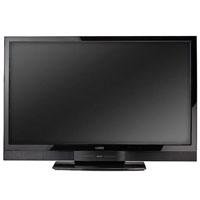
VIZIO SV420M 42 INCH CLASS 1080P 120HZ LCD FULL HDTV Features
|
|
 |
|
Best Price : Availability : N/A |
VIZIO SV420M 42 INCH CLASS 1080P 120HZ LCD FULL HDTV Features
|
|
|
 |
Rating :  Best Price :$849.99 Offer Price : $762.00 Availability : Usually ships in 1-2 business days |
Samsung LN40C550 40-Inch 1080p 60 Hz LCD HDTV (Black) Features
|
|
|
 |
Rating :  Best Price :$1,499.99 Offer Price : $1,499.00 Availability : Usually ships in 24 hours |
Mitsubishi WD-65737 65-Inch 1080p 120Hz Home Theater DLP HDTV Features
|
|
|
The first step in building a good home theater is to get a job with a major producer of projection equipment to learn how to set up and maintain your home theater. Although this is what I did, of course it is not necessary to go to that extreme.
My training and experience with Barco Projection Systems, helped in setting up and obtaining the equipment needed for my home theater. I started with a dark basement room that was only about 9 by 20 feet. I had used it for many things over the years, from a play room for my daughter, to a workshop, a space ship, and now a home theater.
From work at Barco, where they were remodeling, I picked up some cloth-covered wall dividers they were throwing out and placed them along the sides of the theater too hide the cinder block walls and reduce the echo for sound improvement. I then paneled and painted the end wall a flat white for the screen. I use the entire wall for a screen with no border, that way the projected image becomes the border and it never looks like the movie is not filling the screen when watching a wide screen version.
It is good to know that all movies are shot on 4/3 ratio film. Wide screen versions just crop the top and bottom to make it look wide. I usually test a movie in both wide screen version and full screen to see where they are cutting the image. Sometimes after a movie had been edited to wide screen it is cut again on the sides to provide a full screen version. Kodak has produced such a high quality of movie film that it allowed the film makers to reduce the area of the raw film and still get an acceptable resolution. I enjoy both the wide screen and full screen versions. But is nice to fill out the entire wall with the picture.
For a projector, I kept my ears open for units being scrapped or sold cheep to employees. A few years after working for Barco they sold off some of the older demo equipment and I picked a Barco Graphic 400 projector. At the same time I bought a second broken projector for spare parts. Total cost was $150.00. Over the years with Barco I collected other used or broken equipment to add to my theater. The Video Enhancer VSE20 was a much needed accessory. Without line doubling the large image produces horizontal lines resulting from the resolution of the TV quality image from tapes and DVDs. The line doubling smooths out and fills in the missing information on the screen, resulting in HDTV quality from all TV and DVD input. No need to buy a HDTV.
With a good stock of extra parts for my old projector and a set of service manuals, I should be in good shape for many years to come. I have had to make a few repairs and adjustments over the years, but it has been worth it. The VS20 creates a lot of heat and after about two hours I would have to let it cool down, so I installed two quiet CPU fans on top of the chassis and solved the problem. When I started building the theater I picked up a display sound system from K-Mart for under a hundred dollars and the surround sound has been great. The projector is mounted overhead so it is not in the way and we have four nice rockers for viewing the movies.
For an added touch I installed rope light along the ceiling with a dimmer control. We occasionally watch TV in the theater but mostly save it for movies. We don't rent anymore, and try to pick out good DVDs to add to our collection. My favorite movie is Ground Hog Day, I never get tired of watching it and it is much better without the commercials.
You can still get good used projectors on E-Bay, try searching "BARCO" and look for projection equipment and video enhancers. The Small DLP technology projectors for under a thousand dollars make good home theaters also and video enhancing is not needed as you can only get the resolution that the projector is capable of. The digital processor in the projector acts as the video enchancer. The large image may not be as smooth as with a CRT projector and the lamp replacement costs are factors to consider when obtaining a large screen projector.
About the Author: Hubert Crowell, Cave Explorer
I have started writing as a hobby and plan to write about my life, work, hobbies, religion and many other things of interest to me and maybe others will enjoy also.
For more information on caving, improving your service department and many other subjects, Please visit my web site at:
http://hubertcrowell.name/
Recommend : lg lh50 lcd hdtv blu ray accessory kit samsung lcd hdtv 1080
As with every review, I will give you bad news as well as good, with the good news coming first.
The Good...
Samsung is the top-seller of DLP TVs for 2007, and second only to Sony in LCD HDTVs. Samsung prides itself on innovation, in design as well as technology.
Many consider Samsung LCD HDTVs as a viable alternative to Sony, as it has comparable quality at a lower price. Apart from the popularity of LCD and DLP sets, Samsung is also admired for the high contrast ratio in its plasma sets, resulting in deep blacks and vivid colors.
Innovation
While most HDTVs are black, Samsung adds an amber tone to its TV cabinets.
CRT sets need their lamps to be replaced every 3-4 years, which will set you back a few hundred dollars, every time. Samsung was the first to use the Texas Instruments LED technology to eliminate this problem and, in consequence, the necessity of replacing the lamp. Also, this technology is said to have a life of twenty years, which implies large savings, in the long run.
Role Of HDTV Redefined
Samsung has an avowed aim to redefine the role of HDTVs. To this end, its HDTV sets - both entry-level and premium - in 2008 come with side-mounted USB 2.0 and HDMI ports. This facilitates connection of digital devices to view video and images on the HDTV.
Interactive HDTVs
Some advanced models can receive streamed web content and select RSS
feeds, as well as PC files. This is facilitated by a digital media adaptor - an optional accessory. An admirable attempt to convert a TV into an interactive device!
...The Bad And The Ugly
LCD Blues
Samsung LN-S4695D 46" LCD TV has a poorly written manual. That apart, the set has no cable card if you are looking for that feature.
There is color bleeding - a resultant of the backlight. "Pixelization" is evident when you view Standard Definition TV.
This set has a sluggish remote, and channel changes are slow. DVI and USB connections are missing; HDMI and other input ports are at the back, instead of the sides. It also has an 8ms response time which is relatively lower than 4ms in competitor brands.
The next model in this line, the LN-S4696D ha a flawed backlight display.
The Samsung 52" LCD Black Flat Panel HDTV has an intolerable amount of glare. Also, it is difficult to set-up, with much tweaking needed, before you can get a satisfactory picture.
Not Much Luck With Non-LCD Either
An owner of the Samsung TX-T3092WH CRT TV says the set has "some geometry issues", with vertical and/or horizontal lines that are not perfectly straight.
The HP-S4253 Plasma TV is said to have an audible buzzing sound that cannot be ignored even when you turn up the volume. It also has HDMI problems. This set is heavier than an LCD TV.
The Samsung 50" Widescreen Black Plasma HDTV (FPT5084) has a glare problem.
The Samsung HL=S5687W 56" DLP HDTV has an audio problem, and sounds like a mono even when set in stereo mode. This could have to do with the design of the internal speakers. The only solution appears to be to connect it to an external surround sound system.
The Last Word
Looking at Samsung as a cheaper substitute for Sony, the price factor might suffice to console you, if you face niggling worries with your purchase.
Richard J. Runion is the President of Geostar Publishing & Services LLC. Rich loves net research & blogging. His new blog on HDTV is fast becoming popular, as it is comprehensive and well-researched. Read his blog at: http://www.besthdtvreview.com
Visit : sony bravia z series
 |
| Rating : Best Price :$749.99 Offer Price : $699.00 Availability : Usually ships in 1-2 business days |
Epson PowerLite Home Cinema 705 HD 720p 3LCD Home Theater Projector Features
|
|
|
Projectors, especially the high end home theatre models represent a significant purchase including the replacement cost of the projector lamp, which will eventually need replacement. For the novice, selecting the right projector for themselves is a journey which in many cases results in a wrong decision.
It is best to become at least a little bit educated about what the options are and the strengths and weaknesses of the different types of projectors on the market. High Definition projectors are now available and the standard choice, given the future of high definition broadcasts. There are basically three types of high definition projectors: LCD (liquid crystal display) HDTV projector, DLP (digital light processing) HDTV projector, and the newest technology, the LCOS (liquid crystal on silicon) HDTV projector.
An LCD projector produces a brighter sharper image but at certain resolutions and size of the image, pixilation may occur. A DLP projector will give better black levels (provides a better image when the image is a night seen or of an indoor scene in an dim room), although the image details are usually less sharp.
While price is a very important factor in selecting a projector, it is important to make sure the model selected will meet you picture viewing and other needs.
Other considerations include: 1. what will be the room light conditions, as rooms with un-shaded windows will require a higher lumens rating; 2. if the unit will be ceiling mounted, will air conditioning be available as hot air rises and excessive heat may lessen the projector fan's ability to cool the lamp; 3. type of bulb may vary between UHP - Ultra High Performance, UHE - Ultra High Efficiency (most common), or metal halide lamps; 4. how many and what type of connection ports there are; and 5. what size projector do you need (if portability is involved).
While the cost of a DLP HDTV projector ranges around $2,000 or more, an LCD HDTV projector generally is less than $2,000. Recently LCOS HDTV display has become popular given its higher resolution of 1920x1080 internal resolutions, although the cost of $5,000 to $20,000 may be prohibitive.
Finally, note that the cost of replacement lamps range from $200 to $600 so inquire what that cost would be for your model.
G. Thorpe is a freelance article writer and specializes in consumer electronics. Visit http://www.hitachilamp.com for more information on projector lamps and information on changing your lamp.
Friends Link : lg lh30 samsung led hdtv
As technology advances at breakneck speeds, buying a new television set seems to get more and more complicated. But with new innovations such as digital TV, HDTV, Freesat and home cinema sound, if your current TV set is more than 5 years old, now is a great time to upgrade.
This guide takes you through these new innovations and aims to help you make a purchase that will take your enjoyment of television to a whole new level.
LCD or Plasma
LCD and Plasma technologies work in very different ways, but the advantages of both are similar:
* No scanning lines enable a better quality flicker free picture.
* Sharp, clear pictures with less reflection from sunlight.
* Wide viewing angle - slim space saving design.
* Slim attractive TVs that can be wall mounted like a picture.
When choosing between a Plasma or LCD TV, it is really just a question of size. LCD is at its optimum performance up to and including 32 inches, whilst Plasma offers optimum performance at 37 inches and above. Therefore, if you wish to purchase a smaller flat panel set, then LCD offers the greater performance, in contrast if you are looking for a larger screen size, Plasma is the best option.
HD TV
Perhaps the most significant innovation to television since colour technology, High Definition (HD) TV brings detail, clarity and colour, with images often 4xs as sharp as those from traditional television sets. To view high definition programmes you must have a HD Ready TV. Sky and Freesat have already started broadcasting in high definition so you can now enjoy a range of your favourite programmes, films and sporting events with amazing life-like pictures.
If you choose not to invest in a high definition source at this time, you need not be concerned as all HD Ready TVs work excellently with standard broadcasts. As well as enhancing the picture quality and enjoyment you get from the TV, purchasing an HD Ready TV is a way of 'future proofing' yourself.
Integrated Digital Tuner
A TV with an integrated digital tuner (also known as an idTV) allows you to receive all free to air digital channels, including E4, BBC3, Sky News and many more without the need for a separate set top box.
However, if you plan to team your new television with a sky digital subscription than an idTV may not be necessary.
Freesat
Freesat, is a brand new digital satellite TV service provided through a partnership between the BBC and ITV, giving you free HD programmes at no extra cost. Freesat has no contract, no subscription, just a one-off payment for the TV, satellite dish and installation. And because Freesat is broadcast via satellite, it is available to almost every household in the UK. Freesat TV is currently only available with Panasonic TVs.
Home Cinema
A Home Cinema System brings the full sound and big-screen experience of the movie theatre into your home. Technology has advanced so far in the last few years that you can enjoy amazing quality audiovisuals without paying a fortune. Dolby Digital Surround Sound allows you to become absorbed in the action, while a projector TV offers incredibly clear widescreen viewing.
o A Home Cinema System with Dolby Surround Sound takes movie watching to a whole new level. Wherever the action is on screen - that's where the sound comes from in your room. If there's a helicopter chasing the villain from behind, that's where you will hear the chopper blades! It's an experience that makes watching movies even more exciting and puts you at the centre of the action
o Projector TVs provide the closest experience to having your own private cinema at home. They can provide the largest possible screen size an affordable price. With recent advancements in technology there is very little difference between the three types of projection system; LCD, DLP and LCOS. Basically a projector + Dolby Surround Sound = the ultimate viewing experience!
This article has been brought to you by Laskys. LCD and Plasma TV specialist online shop Laskys is one of the first retailers in the UK to stock the new, award winning high definition (HD), Freesat VIERA series of Panasonic TVs. This product placement builds upon Laskys reputation to supply premium brand TVs, DVD players, laptops, digital cameras and games consoles at very competitive prices, offering unparalleled levels of service to their customers.
Laskys have low priced cheap products including panasonic plasma tv, pioneer plasma television
Friends Link : sony bravia m series
Secret #1: WHAT YOU BUY TODAY WILL BE OBSOLETE TOMORROW, IF IT ISN'T ALREADY.
What you should do about it:
Don't sweat it. Just read what you can before you buy to educate yourself so you don't make a terrible mistake. If you shop wisely, you can get a tremendous leap over what you have come to know as television. The good news is the better stuff coming down the pipe is knocking prices down on the stuff out now.
Plus, consumer surveys SCREAM to the electronics companies that people WANT these new, slim, high resolution Home Theater setups. There are billions of dollars to be made. Those surveys snapped the head of every exec in the biz. They geared up to make more. "Make more" equals "economies of scale" equals "make MORE money," even at lower price points! The first one costs a bazillion dollars: research, tooling up, marketing. Then, with volume, the cost per unit plummets. The guys who want to have very latest get to pay the most. Why be that person?
If you've already purchased a particular technology - Plasma, DLP, LCD, front or rear projector, whatever, ENJOY it. It IS important to realize that wide screen aspect ratio does not equal high-definition TV, though. Some think if the picture is wide, they're there. That might be FAR from there. I hate to say this because I'm a guy and guys hate this - you might want to read the instructions.
Secret #2. And this is really, really big: YOU CAN'T TELL WHAT THE PICTURE LOOKS LIKE FROM WHAT YOU SEE IN THE STORE.
What you should do about it:
What you are doing now. Research. The hard part is cutting through the opinions of weenies who want to see a feather clearly, blowing in the wind at 50 yards. I'll help you there. Read on.
There are three reasons why Home Theater Ugly Secret #2 is true.
1- The sets aren't adjusted right. They are turned way up to dazzle you. The dazzle will bother you when you get home. Worse, it drives the set to what you'd call distortion. The better picture happens when the picture is turned down in brightness, sharpness, contrast, and whatever else has been goosed. Why do they let this happen? It's like a conspiracy that everyone is in on - except you. Because when they are all lined up, 40 sets in a row, the manufacturers know you might think theirs is different and better. But they ALL do it, so it's a wipe. And if a store is a little bit shady, with some hi-def sets to move at a higher profit margin, well, now, those might have been "optimized" to look better than the others.
Yes, most of the hi-def sets CAN be adjusted correctly for you in your home. MAYBE by you.
Did I mention that Bubba the shopper-doofus was there, just before you browsed in, that he found the remote control and screwed up all the settings anyway?
So, you can't trust what you see in most stores. But wait, there's more.
2- Many of the sets are being fed video poorly. A distribution amp or humungous splitter shares the picture among the displays. That hurts the picture. A store might have 40 sets on one distribution, but the ones they really want to move on a purer source, showing a better picture. You'll never know.
3- What you see may or may not be high definition or even good quality. Just as bad, it might be super fidelity you won't likely ever see again. Because, what you watch at home might not be broadcast or cablecast with a good picture.
So, you can see misaligned sets fed bad pictures that bear little resemblance to anything you'd see at home. Ready to drop several THOUSAND on that? Didn't think so. But tens of thousands of people do. Probably WILL this weekend. Eager commissioned salespeople will confide that THIS unit is the superior one. No hidden agenda there, do you think, huh?!
Secret #3. THERE'S SOMETHING WRONG WITH EVERYTHING.
What you should do about it:
Relax. Don't obsess. It's more a matter of things being done different ways by different designers. For example, on this set, the colors are spot on, but the resolution is a little off. On that set over there, the resolution is incredible, but the red... You are still going to love the setup you buy - and remember - you just might have it for 10 years or MORE! You'll look at it more than you look at your wife, husband or kids. I'm talking face time. Relax. We'll get you through this.
A personal note to THE OBSESSIVES:
If you haven't already left this article, I want you to think about the fact that there are millions of screen dots to go wrong. Not that they will, but the 317th one from the left and 119th from the bottom IS a little shaky, don't you think? Time to take a deep breath. One, two, three. Exhale. Even though there's something wrong with everything, if you embrace that thought and LET IT GO you'll be able to enjoy the - uh - big picture. The state of the Home Theater art - even if it IS yesterday's art, is very very nice.
Relax.
Why a Home Theater? And what's it MEAN anyway? Good questions. A Home Theater is simply the natural; evolution of the TV experience. Now that we can, we do. It's how it goes. Basically, you get a shorter, wider picture (more like a movie in a... theater) and the picture is much clearer than the TV you sat too close to as a kid - remember Mom yelling?. And you can have better sound too. It can be all around you, or just in the front. You choose. You can have a box that plays the deep notes - fun things like car crashes, earthquakes, whale farts, cannons. You get to experience them like never before. It's not essential, but it's there if you want it.
A Home Theater is just like going to the movies. Except the screen isn't that big, but you can get a good seat. You don't have to endure advertisements in the 'pre-show entertainment' if you don't want to. You can go to the bathroom and touch the door handle on the way out. No paying $5.75 for a bag of stale popcorn. No popcorn bagging zomboid teenagers. No lines. No sticky floors (unless that's the way you live, not that there's anything wrong with that.)
There. Now you know the top 3 Ugly Home Theater secrets.
But, it isn't quite that simple. At http://www.GreatHomeTheater.com/ there are 9 more secrets revealed. I promise you won't get neurotic or your hands dirty, and I won't talk you out of what can be a tremendous and highly enjoyable leap forward in home entertainment.
Bob Wood, for over 30 years, served in front of, and behind the microphone, at popular radio stations across the United States and Canada. Throughout that journey he developed a passion for great sound and was an early adopter of many of the video toys and tools that have evolved into today's state of the art.
Bob also became known as a voice-actor at that time, leading him to literally hundreds of recording studios where again he would work with top equipment. In the mid 80s, he was able to examine and demo the early high definition broadcast quality equipment out of Japan.
Friends Link : da lite perm wall perm wall fixed frame screen tilting wall mount
The technology of television has continued to advance through the years too and these days there are more choices and decisions to be made when buying a tv than ever before. Some of the terms can be confusing too, but take heart, there is really only a few basic things to keep in mind in order to make a well-informed buying decision.
Most older tv sets made use of analog technology that only allows so much data transfer of picture and sound at one time. So that meant that television programs could only be presented up to a certain quality level that often was not all that good.
However, with the digital age new ways of transferring the data to television sets has come about and now both picture and sound quality can be much better than ever before. You can still purchase analog tv sets if you wish though, and the prices are incredibly good at this point. Just bear in mind that the technology is moving away from analog and will become almost exclusively digital soon.
Didital television has made available high definition tv sets that boast much improved picture quality and honestly, if you are in the market for a television set that you wish to use for some to come, you will want to get a high definition enabled tv or HDTV.
From there you can decide if you want to upgrade further to a plasma or LCD screen. Both have very thin designs and can be mounted almost anywhere, but they can be expensive. If your busget allows for thwem why not get the best picture quality possible? If it's not necessary, don't worry, because the standard hdtv screen is still very good.
There is more to know about buying television sets and accessories, but this should help you be more informed when you make your next purchasing decision.
Jim Johnson writes on many consumer related topics, including televisions. You can find more information on direct tv, dish tv, dlp tv, dvr, high definition tv, lcd tv, plasma tv, projection tv, satellite tv and more at Television Deals Online [http://www.television-deals-online.com]
My Links : sony bravia s series
With the competing technologies of Plasma, LCD and DLP, it is probably obvious that the LCD proves its winning streak.
Right now, LCD's fame and distinction have exploded. They are now considered to be the most advanced and latest high definition form of viewing. Let us review how everything that we know about LCD materialized.
It is a usually unknown fact that the LCD technology came form the year 1888 when Austrian scientist Friedrich Reinitzer discovered the properties of liquid crystallization. In computation, the LCD TV concept is more or less eighty years of age. So when this concept was introduced, engineers used it in marketing their products. The first hard work was recognized to be from George Heilmeier who is an Electrical Engineer from the University of Pennsylvania. He utilized liquid crystallization process in his commercial products. He has a Ph.D, M.S.E., and M.A's Solid State Electronics from the Princeton University. While working with colleagues Nunzio Luce, Louis Zanoni, Lucian Barton, Joel Goldmacher, Joseph Catellano, and Richard Williams, he developed the LCD technology one at a time.
Before the LCD system came together as a whole new technology, its parts were conceived separately. Liquid crystal display or LCD was a by-product of the experimentation with liquid crystals. While the mentioned brains of this technology were experimenting, they found out that it is possible to create clock, digital watches, and calculators through what later came to be known as LCD technology. The digital clock that is famous today is from Heilmeier's hard work with RCA.
The LCD technology was passed to and further developed by James Ferguson. He is a University of Missouri graduate and became the director of the Kent State University's Liquid Crystal Institute. He was able to discover the nematic field effect which led to the prototype for LCD TV displays in the present time.
In 1971, Ferguson's team was able to unveil the first LCD but unfortunately it seemed to be a disappointment because of the "phantom images" that were displayed during its action broadcasts. They have made necessary arrangements and improvements thus the creation of the modern day LCD. Picture transmission was improved and so picture quality became better. Because of this extreme hard work, Ferguson was able to make 100 patents and build his own corporation.
LCD truly came from an amazing mental power and hard work. Right now, LCDs are most likely to replace the traditional cathode ray tubes (CRTs) and improve the home viewing experience of every user. Let us be grateful and thank these brilliant minds for coming up with a brilliant screen for a far more brilliant home theater experience.
Check out the largest collection of LCD TV Wholesale and get Free Shipping!
Top products at 45% - 75% discounts from top Samsung LCD TV
Thanks To : da lite da lite da mat perm wall
If you haven't been keeping up with newer developments in TV technology, then you may be surprised by some of the things that have come about lately. After all, the bulky old fashioned cathode ray tube TV sets have been replaced by LCD displays, plasma screens, and DLP projectors. The VCR has been replaced by the DVD player, and the DVD player will soon be replaced by high def DVD players!
Perhaps one of the most revolutionary new developments in TV entertainment technology has come in the form of the DVR. DVR stands for Digital Video Recorder, and is essentially a computer that's been specially adapted to record TV shows off of the incoming TV signal and play them back at a later time. In that sense, the Digital Video Recorder replaces the recording feature of the older VCR. At first glance, many people might not see the advantage of replacing their VCR's with DVR's. A little more information makes the reason to upgrade pretty obvious.
The fact that Digital Video Recorders are computers makes them a lot easier to use in some important ways. First off, the interface to program the DVR is much more intuitive and easier to learn than the interface of any VCR. This makes DVR users actually want to program the devices to record TV shows when they aren't around, while most of us have given up on this capability of our VCR's! Specifically, DVR's allow their users to program them though an on screen program guide, which makes selecting a show to record as easy as highlighting it and pressing a button. Most DVR's also have the added benefit of being able to record at least two channels at the same time.
Digital Video Recorders also have the flexibility that comes with skipping the use of video tapes and recording video on their hard drives instead. The obvious advantage of this is that video cassette tapes are no longer necessary, but there are a number of other advantages as well. For one thing, the hard drives that are built into DVR's these days are large enough to hold an entire weeks' worth of shows, which makes them the perfect answer to catching TV while traveling. Unlike video cassettes, video that's stored on hard drives can also be accessed in any order without fast forwarding or rewinding. External hard drives can also be used with many newer DVR's in order to increase their capacity even more!
Another great feature of DVR's is that they make skipping commercials easy. The fact that you'll actually want to record the shows to begin with helps with this, but many models also have built in functions that can fast forward thirty seconds. This is useful for being able to fast forward without missing the beginning of the next segment of the TV show. Some models will even detect and tag commercial breaks during recording so that they can automatically skip over them during playback.
The fact that DVR's are available through many TV service providers also makes them extremely easy to find. In all, this device represents just how fare TV technology has come.
Nicole Evans writes articles for consumers who want to find the best TV Technology [http://directv.directdigitaltv.com/direct-tv-offers-.html] offers currently available. She has written for many major publications about the latest Satellite TV Technology [http://directv.directdigitaltv.com] offers and Directtv Specials and how buyers can find the best discounts.
See Also : dvd player aquos hdtv da lite pearlescent perm wall
If you've been thinking about buying a home theater projector, perhaps to connect to an HDTV tuner, and have read reviews or done a little bit of research, you'll be aware that there are two technologies competing for the contents of your wallet.
Both LCD and DLP are used in projectors suitable for home theaters, but they work in quite different ways and produce slightly different results. If you ask around ' particularly in electronics stores, you're likely to be provided with a mass of information that's confusing and often just plain wrong. So here, in an effort to clear the fog surrounding projectors, is our guide to LCD v DLP.
LCD
LCD projectors have three separate LCD panels, one for red, one for green, and one for blue components of the image being processed by the projector. As light passess through the LCD panels, individual pixels (or picture elements) can be either opened or closed to either allow light to pass through or be filtered out. In this way the light is modulated and an image projected on to the screen.
LCD projectors have historically had three main advantages over DLP. They produce more accurate colors (due to the three separate LCD panels), they produce a slightly sharper image (although this is as good as undetectable when watching movies) and they are more light-efficient, which means they produce brighter images using less power.
However, LCD projectors also have some disadvantages, although as the technology improves these are becoming less and less relevant. The first of these is pixelation, or what's known as the screen door effect. This means that sometimes you can see the individual pixels and it looks as though you are viewing the image through a 'screendoor.' The second historic disadvantage of LCD v DLP is that LCD doesn't produce absolute black, which means that contrast is less than you would get with DLP.
However, the advent of higher resoltion LCD projectors (particularly 'HD-ready' projectors which have a horizontal resolution of 768 pixels or greater) means that pixelation is less of a problem than it used to be. And the improved ability of LCDs to produce high-contrast images is also allowing them to be taken more seriously by home theater enthusiasts.
DLP
Digital Light Processing (DLP) is a technology developed by Texas Instruments and it works by projecting light from the projector's lamp onto a DLP chip, made up of thousands of tiny mirrors. Each mirror represents a single pixel and directs the light projected onto it either into the lens path to turn the pixel on or away from it to turn it off. Most DLP projectors have only one chip, so in order to reproduce color, a color wheel consisting of red, green, blue and sometimes, white filters is used. The wheel spins between the lamp and the chip and changes the color of the light hitting the chip from red, to green, blue. Each mirror on the DLP chip tilts towards or away from the lens path depending on how much of a particular colour light is required for that pixel at any given instant.
The key advantages DLP has in the LCD v DLP debate is that DLP projectors tend to be smaller and lighter, have better contrast, and don't suffer the same pixelation problems as LCD projectors. There is one problem that some users report with DLP projectors, although it appears to only affect a very small number of people. Because of the way DLP works, at any given instant, the image on screen is either red, green, or blue. However, the images change so quickly, that the human eye doesn't detect this and your brain puts the red, green and blue images together to make a complete frame of video. Unfortunately, some people can see the individual colours, and others can detect them enough to cause eye-strain and headaches. However, technology has improved significantly with the introduction of six-color wheels and faster rotation speeds. The rainbow effect should be a problem for even fewer people. The best way to find out if you're affected is to try out a DLP projector, perhaps by hiring one, before you buy.
Technology in both LCD and DLP projectors is improving all the time. However, at the time of writing DLP still has a slight edge in the home theater market.
Kenny Hemphill is the editor and publisher of The HDTV Tuner, a site which aims to cut through the confusion surrounding HDTV and provide surfers with up to date, accurate and easy to read information on HDTV.
Visit : lg lh50
The looming switch from analog television signal to digital signal has many consumers concerned about being able to continue watching television. Understanding what is entailed in the change will help put most consumer's minds at ease, though there are a few things that will have to be changed in your TV set up, particularly if you still have an analog television.
What Will I Have To Change? For starters, you'll have to buy at least a digital/analog converter if you want to continue using your analog television. This only applies to air to ground signal, though. If you have satellite television service, you already have digital signal and will not lose any programming. Other than purchasing a converter box, buying a digital ready television is your only option. Most TV's produced today are digital ready.
Can I Still Use My Antenna? In some cases, an existing antenna can be used with digital air to ground television signals. Areas that only receive moderate signal with an indoor antenna will most likely need to upgrade to a more powerful outdoor antenna, though. Also, areas that get marginal signal with an outdoor antenna may lose signal completely.
Does My Digital TV Get HD Signal? The answer is simply - No. You'll have to buy an HDTV for that. In addition, you'll have to subscribe to a satellite or cable provider that offers HD channels. (DirecTV HD has the most channles of any provider). There are quite a few different models from which to choose, including plasma, LCD and DLP. New technologies are also being developed to increase the market offerings.
Some areas will have to rely on local channel programming through their satellite television provider. Digital signal offers much greater clarity and better signal, but it does not travel as far as analog signal. Check with your local satellite service company to find out what local channels are offered in your area.
In addition, satellite providers are beginning to offer HD local channel programming, though it is not yet available in any but the largest television markets. The coverage will continue to expand, but it will take several years before it is available in very rural areas.
Does My HDTV Have a Tuner? Many HDTV's have a built in tuner, so you will not have to purchase a separate tuner box to receive air to ground signal. While quite a few models offer this, you should check your owner's manual to make sure. Look for a listing for "digital tuner" or "ATSC tuner."
When Will Analog Broadcasting End? Not long at all. February 17, 2009 is the scheduled date for ending analog signal transmissions. This means that local stations are ramping up their digital preparedness and some are getting ready to start HD broadcasting as well. Make sure that you have a converter box or digital ready television before that date, though, if you plan to keep watching local programming through air to ground signal. A better option, though, is to subscribe to a satellite service provider.
Whitney Alen is a Direct TV expert and has over 10 years experience in the satellite television industry offering great Direct TV deals and offers.
My Links : samsung led hdtv samsung lcd hdtv 1080p 26 inch
After February 17, 2009, your regular television set will require a converter box to receive over the air broadcasts with an antenna. This is because North American broadcasters will be serving their markets with a digital television signal. Cable subscribers will probably need new DTV equipment as well to be able to receive any signal. Since you're going to have to spend money to watch what you're watching now, you might as well put that money towards a new digital television set or an HDTV set right now. It only makes sense, doesn't it?
HDTV provides the highest picture quality and the highest resolution of all digital broadcast formats. When you combine that with the new digitally enhanced sound technologies on the market today, you can actually create a home theater environment that your whole family can enjoy. Some people are worried about the potential cost but you can buy a cheap HDTV on the market today if you look hard enough. So don't let that deter you.
To get started in HDTV just remember that you need three things.
1. You obviously need a high definition television set [HDTV]
2. You need an HDTV satellite receiver or a digital set top box.
3. You need to subscribe to satellite or cable HD [high definition] programming.
Once you have those three things you are now capable of watching HDTV in your home. There are still many people who go home after purchasing a brand-new HDTV and wonder why they're not seeingg anything different than before. your HDTV will receive a signal, just like any other television set at this point, but without the other two items you will only receive standard analog television signals. And believe me, once you start watching high-definition television you can really notice the difference in quality from a standard broadcast. In fact, some people with an HDTV have difficulty watching what they feel is now a "washed out picture" on a standard broadcast.
And it won't matter if you get a flat-panel type, like an LCD or a Plasma set, or a rear projection set style in DLP, LCD orLCoS. As long as they are capable of receiving high-definition signals, you'll be good to go. The type you buy will depend on where you want it to go, the room you have and how fashionable you want to be. Just make sure whatever you buy is HD ready.
Digital sound, digital video recorders or DVRs and an HD [high definition] disc player, will complete an amazing home theater experience.
If you are unsure of what you should buy in any of the items from an HDTV, to a satellite package, a digital video recorder or a digital sound system, you can always visit your local electronics store to ask questions and get your answers. There are also an amazing number of forums on the Internet that focus on the high definition scene and the home theater experience that you can visit. You are free to ask questions and an amazing array of volunteers will help you to sort through the myriad options available in the marketplace today.
Prices for HDTVs and associated components have fallen drastically over the last few years. There is no need to wait any longer. Buy your own HDTV today and get started on an amazing experience!
Buy a cheap HDTV [http://www.hdtvgalore.com/] or buy a cheap plamsa tv [http://plasmatvgalore.com/] today and live the home theater experience!
Related : plasma hdtv with thx display certification samsung lcd hdtv 1080p 120hz
Everyone talks about plasma TVs and LCD TVs, but few talk about DLP TVs. These nifty high-def TVs are not the foggy, oddly-angled and difficult to view low-contrast sets of your childhood, but rather high-tech digitized versions of modern movie projectors, the rear-projection set and a screenless projector usually referred to as a DLP front projector.
Front projector is in essence a DLP rear projection set without the box, let's talk about that one first. These DLP TVs don't look at all like televisions; instead, they resemble digital slide projectors, squat little boxes that have a lens on the front. The television picture is digitally assembled inside the DLP unit and projected to wherever you want, usually a wall or a screen. The great advantage of this sort of DLP TV is that you have a picture scaled to whatever size you like. The disadvantage, of course, is the quality is limited not only by the DLP's specs but also by the quality of your projection surface.
Rear-projection take care of that problem, but at the cost of the great flexibility of the front-projection DLPs. These units look much more like the projection televisions of yesteryear, but with an enormously improved picture. While a DLP TV does not approach the contrast value of a plasma television, they are as good as most LCD TVs and are much tougher units.
A rear-projection DLP TV is surprisingly slender - not wall-mountable like a plasma or LCD model, but still only a few inches deep. Models that are wall-mountable or near it are starting to come on market right now, so you can expect that option in the near future. They are also significantly cheaper than plasma TVs, and in larger sizes are cheaper than comparable LCD TVs.
While the picture with a good rear-projection is not quite up to the standards of a plasma, it is comparable with an LCD TV, and it has another major advantage: the backlight is replaceable. With an LCD TV, the light will dim over time, and repairing it is so expensive that it's cheaper to purchase a new television. A DLP TV light source will go out eventually, but the bulb is completely replaceable, in some models designed to be replaced by the purchaser, and much less expensive than a new set. If your television set is destined to get heavy use, a DLP TV is much more economical over time than a similar LCD TV. And a plasma TV? Forget about it! Once its light dims, it cannot be repaired and must be replaced.
The major manufacturers of DLP TV right now are Samsung, Toshiba, Mitsubishi, Panasonic, LG, and RCA. Most experts prefer Panasonics, but any DLP that uses mirror technology that comes from Texas Instruments is going to do well. The main thing to look for, besides picture quality, is a DLP TV that allows you to change the bulb yourself. Newer sets also use LED lighting instead of halogen lights. This is a distinct advantage for two reasons. First, LEDs last significantly longer than halogens (though halogens still have a long lifespan). Second, halogens generate a lot of heat, and the fan used to dissipate it in the set has a whining noise that irritates some viewers. LEDs emit very little heat and do not have the same problem.
SNS Designs, Inc. owns a number of websites. They carry wide selection of High Definition Televisions, Samgung LCD TV, Plasma Televisions. They offer the most popular in home theatre and a number of televisions that range from Sony, Pioneer to LG that everyone can afford.
See Also : da lite da lite perm wall playstation 3 120 gb
The Multi-Region version is available from Planet Omni.
This player is amazing. It's clearly better than the first gen players, bdps1, even the bd91. there are a few little things to consider about blu ray. It SHOULDN'T play cds. if you have 1000 to spend on an Elite blu ray, then you should have good money, like 600 for a Cambridge azure or a like 24 bit cd player. blu ray lasers are very narrow, and will not read cds correctly, and to make them do so would be way more work than is considered worthwhile by the major manufacturers.
That being said, DROOL! best upscaling I have seen on any player to date, full streaming features, and the Pioneer Elite look. It's a really good player and I for one think that it's the best to date.
It plays CDs, as well as internally decodes advanced audio (minus DTS-HD Master) into PCM for transmission over HDMI or analog, for all the legacy receivers out there.
Very nice Blu Ray player though with many nice features. Loads like a computer not as fast as a regular player but no big deal. This model is much better than the last from this line. Picture and sound is so wonderful on a Pioneer Plasma TV.I also have the Elite VSX-91TXH amp to go with my system Great Work Pioneer but work on the prices ok.
WOW That is awesome player!
I am starting to flavor Pioneer the most.
According to the manual for the BDP-94FD, the connector diagram on page 11 shows 8 RCA connectors to support 7.1.
I doubt there will be any major physical changes between the BDP-94FD and the to-be-released BDP-95FD.
I don't claim any special expertise but my experience with Pioneer Elite has been my barometer. I bought a second DVD a couple of years back to support both DVD and SACD which my Denon did not. The Pioneer bested the Denon in both Picture Quality and musicality in my setup AND the Pioneer is still working, the Denon's motor went about 6 months ago. Sounds real simple to me...........
Pioneer's new Elite Blu-ray player, the BDP-95FD, is geared to audiophiles as much as it is aimed at videophiles: In addition to HDMI 1.3a and x.v.ycc color, it has bitstream output of even the highest audio codecs, including DTS HD Master Audio. In other words, if you just bought one of the latest, most kick-ass A/V receivers, you might actually be able to use its audio decoders.
The receiver does a few other things too, most notably acting as a media streamer for PC content from Pioneer's Home Media Gallery system.
Pioneer® Elite® BDP-95FD Blu-ray Disc Player
The new Pioneer Elite BDP-95FD offers unprecedented high definition picture and sound as a result of HDMI 1.3 connectivity. In addition to superb picture performance, the increased bandwidth capacity means the player has internal decoding of high resolution audio formats: Dolby® TrueHD, Dolby® Digital+, and DTS-HD™ as well as bit-stream output for all advanced audio formats including DTS-HD Master for 7.1 surround sound performance. The BDP-95FD can faithfully reproduce the 1080p 24 frames per second (fps) rate needed to preserve feature film sequences as the director intended. The Pioneer Elite Blu-ray Disc player incorporates HDMI Consumer Electronics Control (CEC) to ensure streamline integration with other HDMI-CEC enabled high definition theater components. This feature allows users to control a whole home theater setup with a single remote for maximum convenience capability.
The new Blu-ray Disc player offers Pioneer's exclusive Home Media Gallery that allows users to directly access and playback music, movies and photos stored on a home PC. The user-friendly home networking feature also provides IP networking for immediate downloading and of new digital media files straight from the computer through the BDP-95FD to a connected flat screen television. The Pioneer Elite Blu-ray Disc player is compliant with Digital Living Network Alliance (DLNA), Window and Apple computers video, Windows Vista or Windows Media Connect as well as Microsoft playsforsure™ DRM technology.
How very happy am I that I was a Pioneer Elite "Target"...The VSX-94 is beyond comprehension, when matched with the Bdp-95, life becomes absolutly, hilariously in harmony..that, and after it took two weeks complete a very effective hook up, I WAS AT ONE WITH ELITEZEN MANUALS....
I just picked up a Pioneer Elite BDP-95HD from the Pioneer Store in Costa Mesa.
I will keep this first post for answers to common questions so that new owners get answers quickly.
Does the Pioneer Elite BDP-95HD generate the DTS-HD Master Audio Bitstream that can be decoded by the receiver / processor?
-- Yes. My Integra DTC-9.8 displays 'DTS-HD MSTR' when I select DTS-HD Master Audio sound track from disk. Audio is un-frig'in-believable!
Are the load times improved over the 94HD?
-- Using POTC: COTBP as a benchmark, it took 22 seconds from pressing START on the remote to the POTC "loading..." message to appear and a total of 38 seconds for the Disney screen to appear
How does the PQ of the 95FD compare to the 94HD?
-- Very similar - 95FD just slightly sharper
How well does the 1080p24fps work:
-- Flawlessly
How is good is the DVD SD upconversion on the BDP-95FD?
-- Excellent (better than the BDP-94HD and the HD1)
REPORTED ISSUES or PROBLEMS: None.
I have been watching Kingdom of Heaven Blu Ray while listening to the DTS-HD MA sound track (Integra displays DTS-HD MSTR :-) Sounds un-frig'in-believable.
Player seems to be operating flawlessly. Boot up time very acceptable. Responds to remote immediately. It is difficult to tell if there are any PQ differences from the PS3 that I had but the DTS-HD MA is mind blowing...
It just took 35 seconds from pushing the close button on the remote to Kingdom of Heaven to begin playing...
With Disk in DVD player and player on stop, using POTC: COTBP it took 22 seconds for the POTC loading message to appear and a total of 38 seconds for the Disney screen to appear...
After setting it up I can't help feeling déjà vu all over again. As you can see in the pic it does look nearly identical to the 94HD and HD1. I do like the class look it has though. I really like that high gloss piano finish look. As Tony said it takes about 35 seconds for titles to start playing. Which actually is a pretty BIG improvement over the two older models. Just like the others initial set up is a breeze. I do like the Pioneer start up screen better on the 95FD. It just looks cooler. I am not only comparing this unit to its brothers (or cousins) but also to the Samsung 1400. This ELITE unit costs more but you feel like it is money well spent.
Once again I love having the resolution button on the remote. Being able to change it on the fly is so much nicer then having to stop the movie and go into the set up menu (like the 1400 and HD DVD players). If there is one feature other manufacturers could learn from Pioneer that would be a good one to start with. Also, having 1080p/23.98 (24) done without issues is a breath of fresh air. Toshiba has been struggling as many of us know so it is nice to get a unit out of the box (just like the 1400, 94HD and HD1) that can do 1080p/23.98 without any EDID issues. I have not spent a great amount of time with this unit but from what I have I can say it is THE best Blu ray player on the market.
The picture Q is very colorful and very sharp. It bests the very impressive (especially for its price) Samsung 1400. Not by a lot in terms of pic Q but when you add the entire package together you know why the Pioneer is more. Picture settings, menu options, great remote (which is light years ahead of the competition) and of course a great picture with great sound. Speaking of sound I have only done a couple of comparisons so far but it is too easy to select bitstream passing in the menu. No confusion here. You are either sending D.D. or DTS via HDMI or PCM... Your call. That easy. I will do more on audio soon but sending the audio to my receiver (Onkyo 905) sounded great just as I expected. It also sounded good the few minutes I had the 95FD doing it. I am not going to say which is better because I do not want to open that can of worms again. So do not ask here. PM me.
I am using the new Sony VPL- VW60 "Black Pearl" (which is the 3rd pic) for all of my comparison so far. It handles 1080p/23.98 like a champ. I can also send it straight into my crystalio II and then tweak the image before sending it to the VW60 in 1080p/23.98. The Pioneer 95FD gets along with all of my other components which I do not take for granted these days.
And yes I am making reference to the XA2 and A35 which are stubborn when it comes to sending 1080p/24 to some displays. In direct comparison to the 94HD the 95FD is obviously a more flexible unit with a little quicker load times. Being able to pass HBR audio directly to the receiver for decoding is a really cool feature. Especially if you purchased one of the newer ones that can decode it. The picture Q is very close. I keep going back and forth. Going straight to my pj it does look like the 95FD is just a little more sharper but their brilliant colors are nearly identical. I will say the home media gallery looks more refined on the 95FD. I have never really got into that feature before but now I am intrigued so I may just jump in!
Bottom line is if you have the 94HD and do not care about the bitstream audio feature then there is absolutely no reason to dump it for the 95FD. However, if you do not and are interested in getting the best Blu ray unit in terms of features and pic/sound Q then look no further than the 95FD! I hate to keep picking the new Pioneer units as my favorite Blu ray unit but honestly the other companies are still two steps behind. The 95FD is the starter in my set up. More to come (SD DVD versus the A35 and XA2 and even 1400) as well as a few more thoughts on audio...BTW, Fantastic Four: Rise of the Silver Surfer (BR) is looking and sounding awesome on this unit! Pick up a copy!
Well, I am pleasantly surprised to post that the 95FD has excellent upconversion. Much better than the 94HD and HD1. I even put it through the HQV Blu ray benchmark tests and it handled them very good. Especially my favorite stadium torture test! And as tradition lately it even made my adult videos look great! It is right on par with the A35 and XA2. I will work harder tomorrow and do real side by side comparisons (1400 included) but my first initial impressions are very good to excellent... More to come..
Great report Joe. Thanks. Looks like a winner. I too LOVE the "classic" look and finish of "Elite" equipment. This is definitely the machine I will purchase when my Onkyo 885 Pre/pro arrives.
Have you compared a 5.1 PCM track coming out of the PS3 vs. 95? I know there should not be a noticeable difference, but if you would not mind doing a comparison I would be curious to know for sure.
It is not surprising that DTS-MA sounds better from the 95 as we are getting the full signal vs. only the 1.5 core of the PS3. Can't wait to hear this!
The DTS-HD hi res is from the King Of New York's DTS HD soundtrack (I am reviewing) and the DTS-HD MASTER is from the Fantastic Four: Rise of the Silver Surfer soundtrack which states it is DTS-HD MASTER...
As I posted earlier in this thread the 1400 is very close but the 95FD produces a sharper image. I also prefer it for SD DVD upconversion. I also prefer all the other cool features like the resolution button on the remote. It is much nicer being able to change resolutions on the fly then having to hit stop and go into a set up menu. Especially when you are trying to compare them! I have spent awhile this afternoon playing different blu ray discs but tomorrow I will do my comparisons between the XA2 for SD DVD upconversion. I predict the 95FD will be on par with the XA2. We need to find out which chip it is using because it is by far much better than the 94HD and HD1... More to come tomorrow...
If the 95 can match the XA2 on SD upscaling this is a tremendous plus. The XA2 makes new DVDs almost look like HD and the only players so far that can do the same job are the very Hi-end Denon's or players costing 5 times more. The Samsung 1200 has the same Reon chip and should also be great but lacks the new audio features. Depending on your tests I will be a new 95 owner soon.
I have the bdp-95fd and the pdp-6010fd display. Extremely happy with it. Firmware support has been excellent. I am using it with a TacT 2.2x digital preamp, TacT digital Boz amp, Escalante Pinyons and a pair of Escalante subs. My connection is through the coax digital output. I have had an signature upgraded Denon 3930 in my system using the same set-up and I must say the sound quality and bass impact blows me away on the bpd-95fd In stock form, the Pioneer bpd-95fd is an excellent performer in terms of audio and video.
Given my system can only process two channel audio through the digital output, am I getting the two channel version decoded Dolby Digital Plus?
Me too, I have the 95 and a 94 receiver and it is quite impressive in the sound department. It is a definite benefit to have the ma tracks. If you have good equipment.
High resolution picture and sound performance come together in the new Pioneer® Elite® BDP-95FD Blu-ray Disc® player introduced at the CEDIA Expo today. Pioneer Electronics (USA) Inc. is showcasing its highly anticipated player, the industry's first to offer bitstream output of all advanced audio formats including: Dolby® TrueHD, Dolby® Digital+, DTS-HD™ High Resolution and DTS-HD™ Master Audio.
The BDP-95FD ensures a near cinematic experience with its ability to handle 1080p 24 frames per second (fps) reproduction rate preserving a feature film's original sequence. Taking advantage of HDMI® 1.3 connectivity, the new player provides smooth, pristine imagery and dynamic 7.1 surround sound to deliver the full emotional impact of Blu-ray Disc feature films as the director intended.
The Pioneer Elite Blu-ray Disc player leads the industry with sophisticated home theater offerings including HDMI Consumer Electronics Control (CEC) to ensure seamless integration with other high definition theater components. In addition, movies, music and photos can be easily streamed from a home PC to connected 1080p television via the player's enhanced home networking functionality for unrivaled entertainment.
"Our newest Elite BDP-95FD player is like having a movie theater projector delivering best-in-class picture and sound at home. Its high performance is a testament to our optical disc heritage and commitment to delivering the ultimate home theater by introducing lossless high resolution audio that entertainment junkies will truly appreciate," said Chris Walker, senior manager of marketing and product planning at Pioneer Electronics (USA) Inc. "When combined with a KURO television and Elite A/V receiver, the BDP-95FD immerses home audiences in a seeing and hearing experience like never before."
Next Generation High Definition Performance
Leading high definition home theater, the BDP-95FD delivers unprecedented picture and sound as a result of HDMI 1.3 capability. The new generation HDMI version is designed for smoother connectivity to emerging 1080p flat panel televisions and other high resolution devices. With increased bandwidth capacity, the Pioneer Elite Blu-ray Disc player can transfer larger amounts of uncompressed high definition video and audio resolutions as well as standard DVD that will immerse viewers in an unforgettable viewing experience.
Stunning colors and enhanced picture reproduction are complimented by the player's additional support of lossless digital audio formats Dolby® TrueHD, Dolby® Digital+, DTS-HD™ High Resolution Audio and DTS-HD™ Master Audio. As a result of HDMI 1.3, the BDP-95FD brings the highest quality sound performance of Blu-ray Disc film titles to the living room giving audiophiles up to 7-channels of pristine audio that defines ultimate home theater.
High Definition Integration Made Simple
Streamlining the integration of multiple home theater components, the BDP-95FD offers HDMI-CEC technology. This new convenience feature synchronizes the Blu-ray Disc player with other CEC-enabled products and controls an entire setup with a single remote. With an easy to navigate graphical user interface, HDMI-CEC requires minimal user effort while ensuring premium performance and maximum entertainment.
Cinematic Picture At Home
Mastered at 1080p 24fps, Blu-ray Disc movie titles preserve a feature film's original sequence to faithfully deliver stellar image quality. Pioneer engineers designed the Elite BDP-95FD Blu-ray Disc to handle and output high performance 1080p 24fps signal for natural, pristine film reproduction as the director intended.
Home Media Gallery
Digital media fans can playback their favorite downloaded video and music files as well as personal photos straight from a home PC hard drive to their high definition television through Pioneer's exclusive Home Media Gallery.
This home networking feature provides users a rich, high definition graphical interface with fast navigation to search, select and play desired content. Home Media Gallery offers IP networking for quick access and downloading of new digital media files straight from the computer for immediate viewing through the BDP-95FD on a connected flat screen television. The Pioneer Elite Blu-ray Disc player is compliant with Digital Living Network Alliance (DLNA) sources, as well as Microsoft Windows XP, Vista, and Media Center editions, as well as 3rd party DLNA server software available for both Mac and Linux based computers.
Some Blu-ray players have Dolby TrueHD, some even have Dolby Digital+, DTS-HD High Resolution or DTS-HD Master Audio, but Pioneer's BDP-95FD is the first to pack all four - guess that's why they call it the Elite.
Pair it up with one of the latest high-end A/V receivers and you'll be able to hear a pin dropped in the background as Bruce Willis takes out a helicopter with a flying cop car (again) in Die Hard 4.0.
As well as its audio treats it ticks the usual high-end 24p, HDMI 1.3 and HDMI-CEC boxes - the latter for taking control of all your HDMI equipped gear from one über remote.
Natch, it's also compliant with Digital Living Network Alliance (or DLNA for short) for accessing content on other compatible kit and it'll stream content stashed away on your PC using Pioneer's Home Media Gallery system.
General
Product Type
Blu-Ray disc player
Form Factor
Tabletop
Width
16.5 in
Depth
13.9 in
Height
4.1 in
Weight
14.6 lbs
Sound Output Mode
Surround Sound
Analog Video Signal
S-Video, Component video, Composite video
DVD
Media Type
CD, DVD, BD-R, BD-RE, DVD-R, BD-ROM, DVD-RW
Built-in Audio Decoders
Dolby TrueHD, DTS-HD decoder
Media Load Type
Tray
DVD Repeat Modes
All, Title, Random, Chapter
Supported Digital Video Standards
WMV, MPEG-1, MPEG-2
Supported Digital Audio Standards
MP3, PCM, WAV, WMA
Output Resolution
1080p
Audio System
Digital Audio Format
DTS digital output, Dolby Digital output
Response Bandwidth
4 - 22000 Hz
Dynamic Range
108 dB
Signal-To-Noise Ratio
115 dB
Total Harmonic Distortion
0.0015 %
Additional Features
Gold plated connectors
DVD Features
Picture Zoom
Yes
Picture Zoom Power
2x, 4x
MP3 Compatible
Yes
Additional Features
Parental lock, DLNA compatible, On-screen display, JPEG photo playback
Remote Control
Type
Remote control
Technology
Infrared
Connections
Connector Type
1 x HDMI output ( 19 pin HDMI Type A ), 1 x Ethernet ( RJ-45 ), 1 x Component video output ( RCA phono x 3 ), 1 x Composite video output ( RCA phono ), 1 x S-Video output ( 4 pin mini-DIN ), 1 x 5.1 channel audio line-out ( RCA phono x 6 ), 1 x Audio line-out ( RCA phono x 2 ), 1 x Digital audio output (coaxial) ( RCA phono ), 1 x Digital audio output (optical) ( TOSLINK ), 2 x Remote control ( Mini-phone 3.5 mm )
Miscellaneous
Cables Included
1 x Audio cable, 1, 1 x Video cable
Power
Power Consumption Operational
35 Watt
Power Consumption Standby / Sleep
0.5 Watt
Power Device
Power supply
Type
Power supply
Power
AC 120 V
Multi-region Blu-Ray Players now available! REGION FREE DVD players/recorders and High Definition, HD DVD players,Advanced Optical players/recorders in Blu-Ray DVD players/recorders. A multi region (aka codefree, allzone) DVD player or recorder is capable of playing DVD discs from anywhere in the world, that is all 8 regions and both PAL and NTSC standards. http://www.planetomni.com has many. Many not only play them but convert from one standard to the other for showing movies on any TV on earth. There are also PAL-NTSC 110-220 volts DVD/VCR Combos for use worldwide. CODEFREE DVD / PAL-NTSC VCR combos and MULTISTANDARD VCRs will play 100% all known DVD discs including FRENCH DVDs. You can buy region free and region free converting DVD players and region free DVD recorders from http://www.mindlogic.com . Come with LIFETIME Warranties and ship worldwide. They also carry PAL-SECAM-NTSC TVs, PAL plasma, PAL LCD and PAL DLP multisystem TVs and multisystem converting and non-converting VCRs, voltage transformers, video standards converters & 140,000 other products. Tel. 877-327-5076, 925-686-9945
Thanks To : pioneer pdp 6020fd da lite pearlescent perm wall aquos hdtv
It’s coming!
It’s coming on February 17, 2009! It’s about to cut off the signal to your TV, and most likely you’re not prepared for it!
It’s almost as big a shift in home entertainment as happened sixty years ago when television replaced radio in America’s living rooms!
It’s DTV! Digital Television is going to change the way you watch television, and how you interact with your TV set. You’re finally going to get movie theater quality picture and sound at home!
• Digital TV is also going to reach into your pocketbook! All U.S. broadcast stations will stop sending analog TV signals, the kind your regular TV reads, on February 17, 2009. Without a new converter box, your TV will not work!
• Many stations are broadcasting a digital DTV signal right now along side their analog signal, but after 2009 they’ll only transmit in DTV.
• This digital signal can only be properly viewed on a new Plasma, DLP or LCD TV. If you don’t own one, you’ll need a converter box to watch digital signals “dumbed down” to show on your analog TV. In addition to the new Big Screen TV, you'll also need a Dolby Surround Sound amplifier and speakers to get the DTV Dolby sound.
• All new TVs sold must have a digital tuner built-in as of March 1, 2007. Your old analog TV will need a set top converter box to receive television broadcasts after February 2009.
• Your cable provider may be able to send you digital cable or digital satellite signals right now, but that doesn’t mean that you can see High Definition programs on your television. If you have an old style picture tube television, a converter in your cable box can take the digital signal and “dumb it down” to analog so that you can see it. You’re still not seeing the super sharp DTV picture, or hearing the crystal clear digital sound.
• Digital Pictures will be free from the flicker, ghosts and snow seen on analog transmissions. More than twice as sharp as Standard TV, DTV signals allow crystal clear images with higher resolution and picture quality than is possible with old style TV.
• DTV will provide programming in wide screen "movie format”. The digital picture is so sharp you’ll be able to read the small text from your computer hooked up to the TV screen.
• DTV allows multicasting: broadcasters can provide a super sharp High Definition (HDTV) program or several Standard Definition programs at the same time. Sending several program streams on one channel is called “multicasting”. The number of programs a station can send on one digital channel depends on the sharpness (resolution) of each program. DTV can provide interactive video and data services that are not possible with the old analog technology.
• DTV features Dolby Surround Sound to give you that full movie theater sound in your home instead of the old, tinny TV sound you grew up with. With a Surround Sound tuner and speakers installed, you’ll get roaring, sparkling sound assaulting your family from all directions: front, sides and rear!
• If you don’t have cable or satellite TV, you’ll need a Plasma or LCD TV with a DTV tuner, or a digital-to-analog converter box to see digital signals on your analog TV. Converter boxes will be available in retail stores during the transition.
• The National Telecommunications and Information Administration of the U.S. Department of Commerce will issue two $40.00 coupons per household that can be applied toward the purchase of digital-to-analog converter boxes. Coupons will be issued starting January 1, 2008.
• An Integrated DTV set is a digital TV with a built-in digital decoder or DTV receiver. If you have an Integrated DTV and live in an area with a DTV broadcast station, you won’t need anything else. You may need an antenna (an outdoor antenna is best) to receive over-the-air DTV broadcast programming. Integrated TVs can receive and display current analog signals.
Television is about to leap out of the Stone Age into the future! Make sure you’re ready for it!
It’s as easy as 123!
About The Author
Ike Ridley is an avid videophile and self-confessed “Movie Nut” who created the 123 Guide To Plasma TV. To visit us, just paste this URL into your web browser:
http://www.123-guide-to-plasma-tv.com
Ike has moved to the Caribbean where he clicks away on his laptop under a palm tree.
Be sure to click here for more information on the Digital Revolution in the 123 Guide To Plasma TV!
This is a 100% free article. You may distribute it freely, give away a copy from your own web site or bundle it as a free bonus with other products. You may distribute this article if it’s intact, with the copyright notice and author information intact.
The article contains no affiliate links. I hope you’ll enjoy it!
Copyright © 2007 Isaac Ridley Jr. Some rights reserved.
Thanks To : lcd flat panel
With its realistic colors and deeper blacks than most, making for a better home-theater experience. The diagonal screen size measurements of as little as 37 inches (and just 44 pounds.
If you are looking for a cost effective big screen TV then a projection TV is most definitely worth considering, and since you were also looking for best 50 you have come to the right place. It is very easy to install as they tend to be quite light in weight, you simply position it where you want it plug it in and turn it on.
Reviews above this line are significantly better than reviews below. Projection TVs perform the best if you are sat directly in front of them. The systems come in screen sizes ranging from typical 42" up to a maximum of just over 70".
Reviews say that although the Sony A2020 series of projection TVs are more expensive than others, they have the best picture quality with no chance of rainbows (which are sometimes an issue with DLP projection TVs). They say this particular Mitsubishi will likely need some color adjustments out of the box, but it's capable of displaying cinematic black levels and terrific detail.
Samsung has replaced this arrangement with an LED light source that produces brilliant light with less energy usage, a longer life, and produces better color reproduction by truly mixing red green and blue sources. Samsung's Cinema Smooth light engine brings together the right optics, electronic circuitry and replaceable light source to create a brilliant picture that’s more lifelike and much closer to film.
Best projection TV systems come in screen sizes ranging from typical 42" up to a maximum of just over 70". Lens assemblies from other manufacturers will certainly be different in detail, but the general sequence outlined above will still apply. Samsung’s Cinema Mode lets you see colors the way the director intended, by matching them more closely to production standards.
They can provide a much bigger picture than CRT sets can, and front - and rear-projection models can suit a range of rooms and budgets.So next time when you are planning to buy another appliance,just consider to buy best projection TV system.
Did you find those tips on best projection TV useful ? You can learn a lot more about best projection TV here." best projection TV [http://www.hdtv.ipod-movies-devices.info]
Income Opportunity: Extra Income - click here
Visit : hannspree widescreen widescreen
Samsung has earned a good name for itself in the field of home appliance electronics manufacturing. Their line of HDTV sets is a feather in their cap. There all sorts of models launched by the giant – Plasma, LCD and DLP. Although the initial prices are high in accordance with the market trend, it is expected to dip soon.
The new range of models emphasize larger screens and higher resolutions like a 42" monitor, 10000:1 contrast ratio and a 549 billion colors display. The soaring contrast ratio of the latest models might portray an interesting statistical picture, but the consumer needs to understand that the human eye has a limit of perceiving images and its visual system cannot discern the offered resolutions. Basically, the higher the contrast ratio, the better the display is, but anything beyond the eye’s range doesn’t really make much sense.
Samsung offers a number of models to choose from. The basic difference in all the models are their types, size, price and add-on features like input/output slots and ports, PC card slots or SD slots, more speakers, hidden speakers etc. The most popular ones among buyers are models ranging from 42" to 63" with customized mini details like in-built cards (which discard the need of external cable box) and hi-fi speaker systems. The presence of the HDMI (High Definition Multimedia Interface) and component ports is a must for every HDTV set. It is to ensure a good picture quality from the DVD player.
Some of the best-seller HDTVs in the market are the LCD line, which is a good option lower cost in lieu of a 'smaller' screen. The LCD comes in a range of 32" to 46". The 46" LN-S4692D model is a flat-panel display on a swivel stand, which provides a 178 degrees view angle. Its contrast ratio is a decent 5000:1. The smaller 40" LN-S4051D version is usually used by gamers using an Xbox. A contrast ratio of 4000:1 and 8 ms response times in the set is ideal for both gaming and TV use owing to its undetectable motion blur.
The DLP style TV models of Samsung come in a variety of small sizes -50" HL-S5065 and the larger- 71" HL-R7178W models offering excellent picture quality. The largest of all – the 71" HL-7178 contains a digital cable-ready card and 1080p video support scoring over the competitor, Panasonic. Even the smaller versions like the 56" HL-S5688W are designed to provide excellent quality 1080p pictures and come equipped with a 14,400 rpm color wheel which minimizes the 'rainbow' effects.
The specifications indicate the letters - 'i' and ‘p’. The ‘I’ model uses the interlacing illumination technique in which the pixel rows brighten every other line, painting the complete screen in two passes. The 'p' type illuminates in a single pass across the screen. The 'p' types are known to offer a superior picture, but interlaced models are not inferior. Although some older ‘i’ models suffered from some flicker with interlacing, this is being rectified now.
Many less expensive HDTVs come without an in-built HD tuner or HD-ready types. This deficiency is overcome by tuners provided by the cable or satellite boxes without a performance loss. HD-ready are generally less expensive, all other things being equal.
The cost price of an HDTV is defined by the screen size and resolution and some extra add-ons. A careful cost and functions comparison must be made before going in for any TV set.
To find out more about HDTV sets and hdtv home theater systems visit http://www.hdtv-info-guide.com
My Links : lg lh55 vizio hdtv with hdmi
Shopping for a new HDTV set can be confusing and intimidating, but if you break the process down into smaller parts, it will start to make sense. The main factors to consider are:
Budget Range
Screen Size
Style (Plasma, LCD, etc.)
Special Uses
Options
Budget Range
First things first. HDTV costs are most closely linked to screen size, but also to display type, picture quality, and brand name. You'll have to read the reviews of individual sets to get all the details, but here is a general idea of what you will get in each price range:
Under $500: 20 inch and smaller LCD, HD-Ready (without tuner) HDTVs. 15 inch integrated tuner HDTVs. You might find some up to 27 inches in certain brands, like ViewSonic and Olevia.
$500 to $1000: 32 inch and smaller LCD, integrated tuner HDTVs, 50 inch and smaller DLP HDTVs.
$1000 to $2000: 46 inch and smaller LCD, 50 inch and smaller Plasma, and 65 inch and smaller DLP HDTVs.
$2000 to $4000: 52 inch and smaller LCD, 60 inch and smaller Plasma, and 75 inch and smaller DLP HDTVs.
Another thing to consider is the substantial discounts you can find on last year's models. HDTV technology is updating all the time, just like computer technology. If you can deal with not having the very latest technology, you can find some amazing deals- 40 percent off, or more, on sets only 18 months old.
Screen Size
Getting the right size HDTV for your viewing space is important. In the old days, the right size TV was the biggest one you could afford, but today many people can afford a TV that is so big it dominates the viewing room, and they are forced to sit so close that imperfections in the screen, or individual pixels, are visible.
Another problem with sitting too close to a widescreen HDTV is that your eyes will be shooting back and forth across the screen, as if you were watching a tennis game from center court. These quick eye movements can make you dizzy and give you a headache.
First, look at the area where you'll be watching TV, and measure the distance from the TV screen to the center of your couch, bean bag, log, or whatever you will sit on. This distance should be 2 to 4 times the diagonal measurement of the screen. So, a 24 inch set would be good for viewing from 4-8 feet, a 50 inch set would be good for a range of 8 to 16 feet, and a 60 inch set would work well from 10 to 20 feet away.
Display Style
The most popular types of flat screen HDTV these days are LCD, plasma and DLP. Cathode-Ray TVs are still around, and they usually have a great picture, but the larger CRTs are extremely heavy and bulky. They are slowly losing out to the flatter-profile technology.
LCD stands for Liquid Crystal Display, and is the same type of screen used in most new computer monitors (you are likely looking at an LCD right now), cell phones, and many other devices. LCDs work the best when you want a medium or small set, need a lighter-weight set, or watch TV in a well-lit room.
Plasma sets have a glass screen (as opposed to LCD's plastic) with an ionized gas sandwiched behind it that creates a picture when it is excited by electric charges. Plasmas have a slight edge over LCD in picture quality, especially when viewed from an angle, but may have more screen glare in bright light.
DLP stands for Digital Light Processing. These sets use tiny oscillating mirrors behind the screen to create a picture. DLP sets are technically rear-projection TVs, but are usually quite flat. They are cheaper than LCD and Plasma in the large sizes but are often a little too heavy and thick to hang on a wall.
Special Uses
What do you plan to do with your HDTV? Are you a gamer, a sports fan, or a movie buff? Different types of sets are ideal for slightly different things.
DLP TVs often have very bright displays, but can lose detail in very dark scenes. This makes them great for watching sports, news, and outdoor scenes, but not as good for movies with lots of dark images. Plasma TVs have a great picture, and still look great when viewed from a wide angle- no darkening or color shift. However, a room with lots of windows may create glare problems on the Plasma's glass screen. LCD TVs are much brighter in bright light, so they are well suited for daytime viewing in lighted rooms. In a brightly lit room, an LCD TV can actually look better than a good plasma TV. And LCDs have better, sharper resolution in the mid sizes, so they are ideal to use as an extra monitor for your computer.
Options
All HDTVs come with a slightly different package of features. A tuner is necessary to receive over-the-air broadcasts. Since they add expense, and many people only use their HDTVs for watching cable, satellite, DVD, video game or computer input, they are not always included. Look for an integrated ATSC tuner, or buy an external tuner to get over-the-air broadcasts.
Good speakers are nice to have incorporated into the HDTV. But, if sound quality is really important to you, you'll be better off with high quality external speakers.
Connections are important. You'll want at least 2 HDMI inputs to hook up to a cable box, DVR, or DVD player. Other types of connections, like component and S-Video cable inputs, are handy in case you want to use external components that use these cables. And if you intend to use your HDTV with your digital camera, you will need a USB or memory card input.
Getting Help
Using an online HDTV buyer's guide can help, too. Find one that balances sufficient attention to detail with a big-picture view.
About the Author
Tom Webster writes for FlatHDTV.net, an online guide to the HDTV revolution.
Friends Link : sony bravia v series
